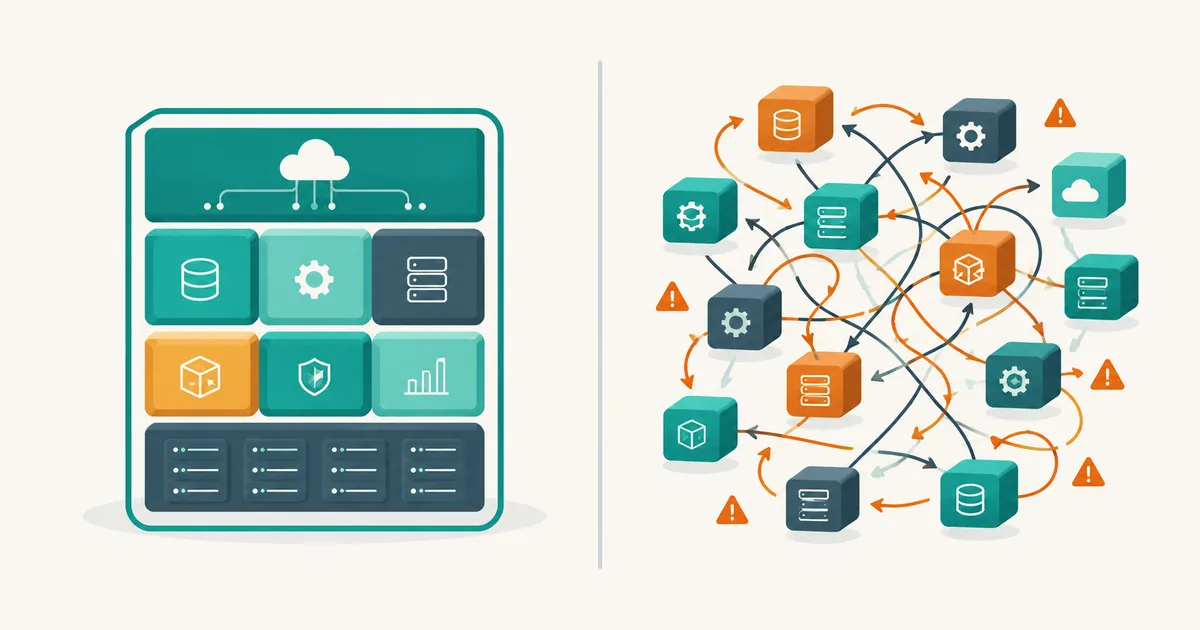
GDPR, PDPL, POPIA, DPDP: One Platform, Four Rulebooks
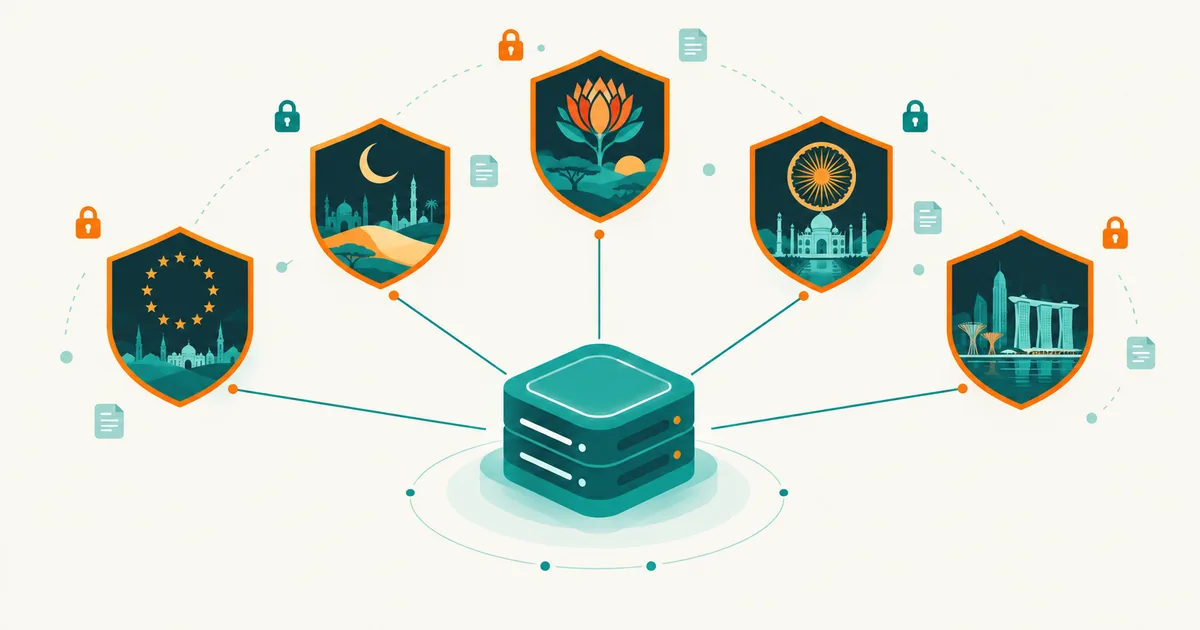
If your platform has users in Europe, the Gulf, Africa, India and South East Asia, you already answer to at least five privacy regimes. The laws share most of their core. Build that core once, then add a thin, region-aware layer for the parts that differ.
One product, many privacy laws
If your platform has users in Europe, the Gulf, Africa, India and South East Asia, you already answer to at least five privacy regimes. GDPR, the UAE and Saudi PDPLs, South Africa's POPIA, India's DPDP Act and laws like Singapore's PDPA all apply to the same database.
Most founders react in one of two ways. Some ignore it until an enterprise customer's security questionnaire or a regulator's letter arrives. Others build a separate stack per country and pay for it every month.
In 26+ years of building platforms across these markets, I've found a better path. The laws share most of their core. Build that core once, then add a thin, region-aware layer for the parts that differ.
This post covers what the laws agree on, where they differ, and the architecture that lets one platform meet all of them.
This is a technology and architecture guide, not legal advice. Confirm your obligations with a qualified lawyer in each market.
The four rulebooks at a glance
Every law below is in force or has a fixed start date, and fines now run to millions of dollars.
| Market | Law | Status (Oct 2026) | Regulator | Maximum penalty | Breach report to regulator |
|---|---|---|---|---|---|
| Europe (EU and UK) | GDPR and UK GDPR | In force since May 2018 | National data protection authorities (ICO in the UK) | €20 million or 4% of global turnover, whichever is higher | Within 72 hours |
| UAE | PDPL (Federal Decree-Law 45 of 2021) | In force since Jan 2022; executive regulations still pending | UAE Data Office | AED 50,000 to 5 million per violation (about $1.4 million at the top) | Required; detailed timing awaits the regulations |
| Saudi Arabia | PDPL | Fully enforceable since 14 Sep 2024; 48 enforcement decisions by Jan 2026 | SDAIA | SAR 5 million (about $1.3 million), doubled for repeat violations | Within 72 hours |
| South Africa | POPIA | Fully in force since July 2021 | Information Regulator | R10 million (about $610,000) and up to 10 years in prison | As soon as reasonably possible, through the Regulator's eServices portal |
| India | DPDP Act 2023 and DPDP Rules 2025 | Rules notified 13 Nov 2025; core duties apply from 13 May 2027 | Data Protection Board of India | Up to ₹250 crore (about $26 million) per breach of duty | Without delay, then a detailed report within 72 hours |
In the UAE, the DIFC and ADGM free zones run their own data protection laws, so check where your entity is registered. In wider Africa, Nigeria's NDPA and Kenya's Data Protection Act follow a similar GDPR-style model.
USD figures use October 2026 exchange rates and are rounded.
What they all agree on: build it once
Most of what these laws ask for is the same. Build these once, for every user, and you are most of the way there in every market.
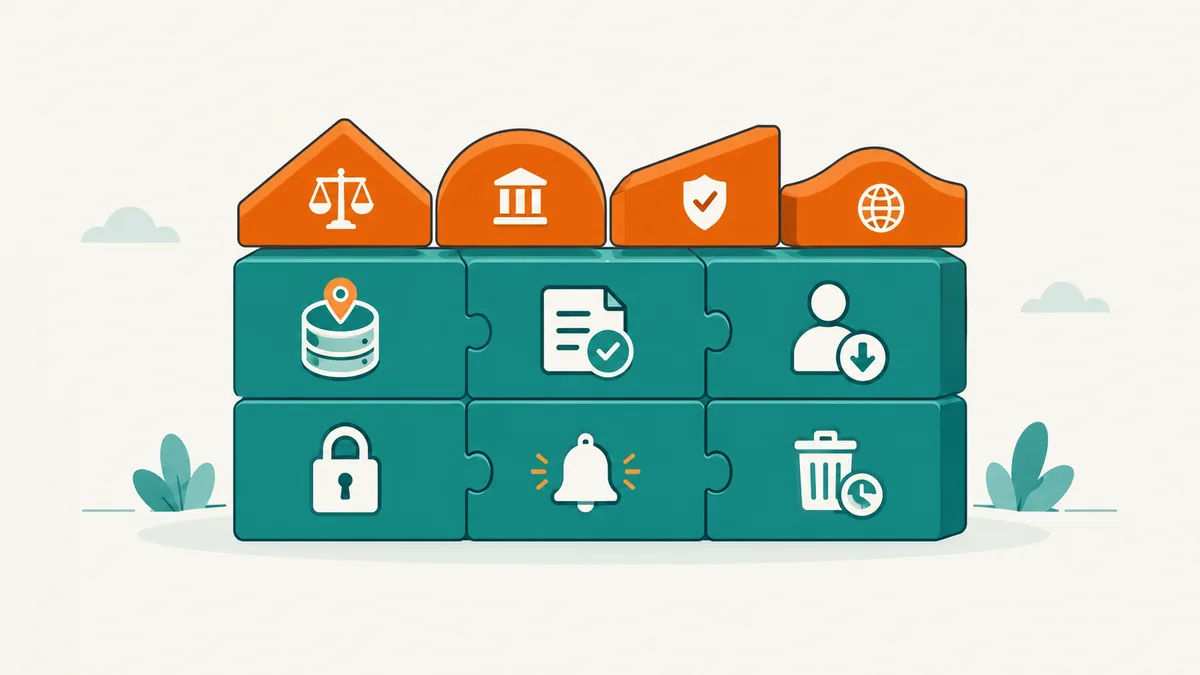
- Know your data. A record of what personal data you hold, where it lives, why you hold it and who can see it.
- A clear purpose and a lawful reason for each use, shown in a plain-language privacy notice.
- Consent that is specific, recorded and as easy to withdraw as to give.
- User rights on request: access, correction and deletion of their data, with a deadline you can track.
- Collect only what you need, and delete it when the purpose ends.
- Reasonable security: encryption, access control, audit logs and tested backups.
- A breach plan: detect, assess and report within days, not weeks.
- Contracts with every vendor that touches personal data, from your cloud provider to your SMS gateway.
- Extra care for sensitive data such as health, financial, biometric and children's data.
If your platform already does this well for GDPR, adding the other markets is mostly configuration. If it doesn't, no single market's checklist will save you.
Where they differ: the parts to make configurable
The differences sit in a handful of places. These are the rules your platform should read from a per-region setting, not hard-code.
| Rule | Europe (GDPR) | Middle East (UAE, Saudi PDPL) | Africa (POPIA) | India (DPDP) |
|---|---|---|---|---|
| Lawful basis | Six bases, including legitimate interests | Consent by default; other bases are narrower | Several bases, including legitimate interests | Consent, or a short list of "legitimate uses"; no general legitimate-interest basis |
| Data leaving the country | Adequacy decisions or standard contractual clauses | Saudi: adequacy, safeguards and a transfer risk assessment | Allowed to countries with adequate protection, or with consent or a contract | Allowed, except to countries the government restricts; some data may be kept in India for large platforms |
| Who you must appoint | A DPO for large-scale monitoring or sensitive data; an EU representative if you have no EU office | Saudi: a DPO for large-scale monitoring or sensitive data | An Information Officer registered with the Regulator, for every organisation | A DPO in India for Significant Data Fiduciaries |
| Children | Parental consent under 13 to 16, depending on the country | Guardian consent for minors | Competent-person consent for under-18s | Verifiable parental consent for under-18s |
| Keeping data | As long as the purpose needs | As long as the purpose needs | As long as the purpose needs | Large e-commerce, social and gaming platforms delete after 3 years of inactivity, with notice; some logs kept at least 1 year |
Two differences catch founders most often. India's DPDP has no general "legitimate interest" basis, so marketing and analytics usually need consent. And Saudi Arabia's transfer rules make your cloud region a compliance decision, not just a latency one.
South East Asia: the fifth rulebook, in six languages
South East Asia has no single regional law. Each country has its own, and several tightened their rules in 2025 and 2026.
| Country | Law | Status (Oct 2026) | Breach report to regulator | What to watch |
|---|---|---|---|---|
| Singapore | PDPA | In force; higher fines since Oct 2022 | Within 3 calendar days if over 500 people or significant harm | Fines up to 10% of Singapore turnover for firms above S$10 million |
| Indonesia | PDP Law 27 of 2022, with Regulation 33 of 2026 | Implementing regulation takes effect 16 Jan 2027 | Within 3 × 24 hours, to the agency and affected people | Fines up to 2% of annual revenue; strict order of transfer conditions |
| Vietnam | Personal Data Protection Law | In force since 1 Jan 2026 | 72 hours under the current decree | Cross-border violations fined up to 5% of prior-year revenue; transfer impact assessments; a 5-year grace period for small firms and startups |
| Malaysia | PDPA, amended 2024 | Main changes in force since 1 Jun 2025 | Within 72 hours; affected people within 7 days | DPO must live in Malaysia; new data portability right |
| Thailand | PDPA | In force since Jun 2022; fines issued since 2024 | Within 72 hours for high-risk breaches | Active enforcement, with multi-million-baht fines in 2025 |
| Philippines | Data Privacy Act 2012 | In force | Within 72 hours | Registration with the National Privacy Commission for larger processors |
For most platforms, the practical answer is a Singapore cloud region as the regional hub. Then check Vietnam and Indonesia separately, because both now have their own transfer rules and revenue-based fines.
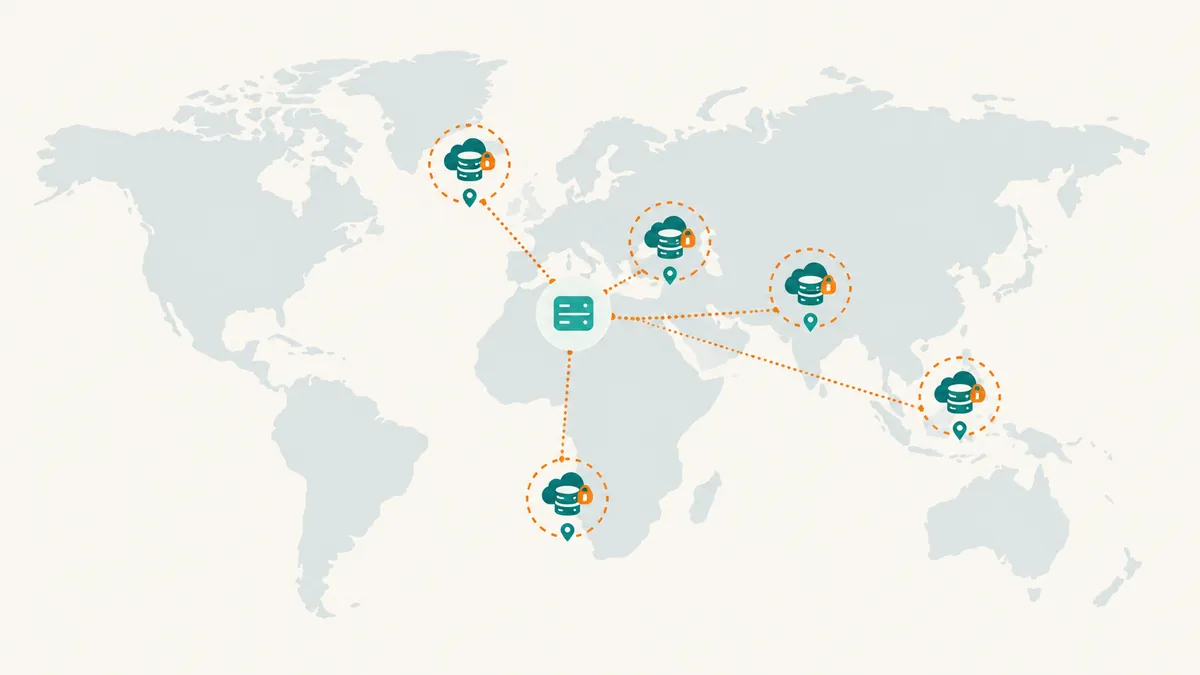
The architecture: one platform, a region-aware privacy layer
The design that works is one codebase with a shared privacy core, a small table of region settings, and data stored in the right region.
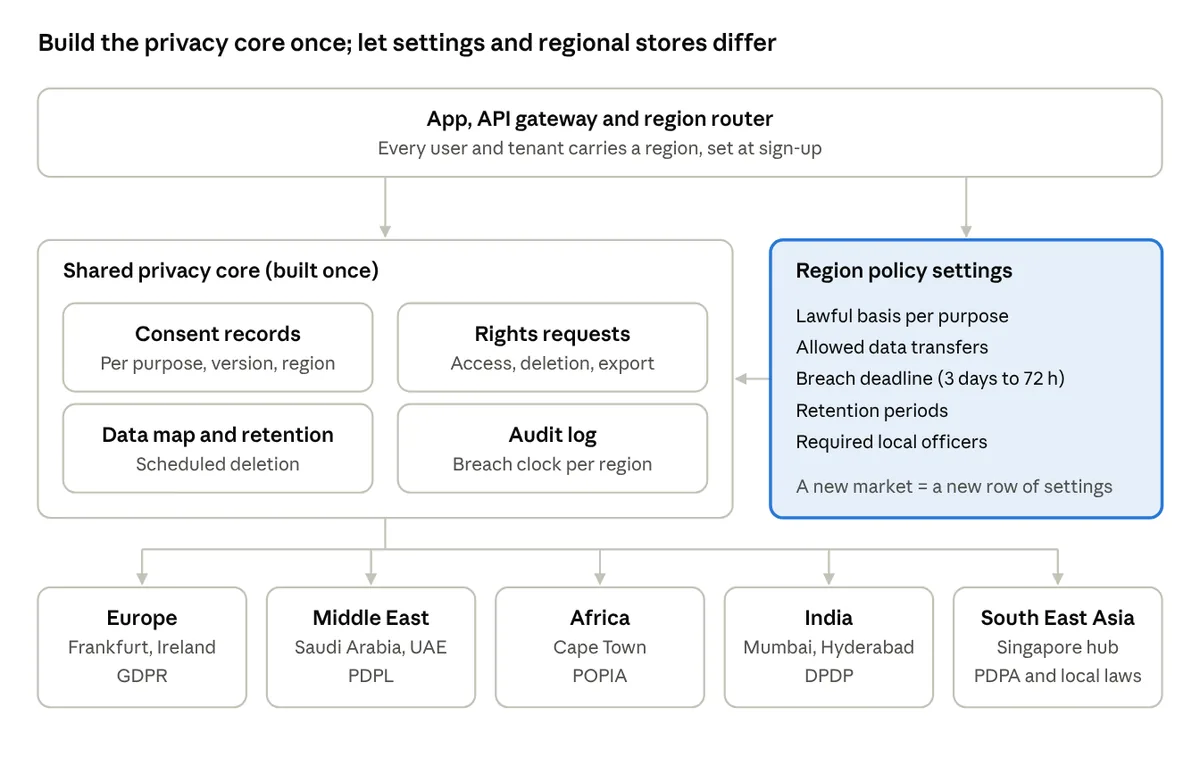
The router reads each user's region and sends their data to that region's store. The privacy core works the same everywhere, and it reads its rules from the region settings.
- Tag every user and tenant with a region at sign-up, and never guess it later from an IP address.
- Keep the privacy core in one place: consent records, rights requests, the data map, retention jobs and audit logs.
- Put the differences in configuration: lawful basis per purpose, transfer rules, breach deadline, retention period and required officers.
- Store personal data in-region for markets that expect it, and keep sensitive data (KYC, payments, health) in a separate encrypted vault.
- Keep analytics and logs free of raw personal data, so they can live in one central region.
- Set the breach clock to the shortest deadline you face, 3 days for Singapore and 72 hours for most others, so one runbook fits all.
This builds directly on a service-ready modular monolith: the privacy core is one module, and a region is a deployment setting, not a fork of the code.
In practice: privacy decisions on real platforms
On the platforms I've architected, the privacy layer was shaped by the market and the kind of data, not by a template.
| Platform | Main market and law | Sensitive data | Design choice that mattered |
|---|---|---|---|
| iGaming talent marketplace with escrow payments | Africa first (POPIA), with global freelancers | Identity (KYC) documents and payment details | KYC files kept in a separate encrypted store with tight access, apart from the profile and job data the rest of the product uses |
| Creative services marketplace | Europe (GDPR) | Contact details, portfolios and client briefs | Consent and data-export tools built in from launch, so access and deletion requests are handled in the product, not by email |
| Community matrimony platform | India (DPDP) | Family, community and personal details in a conservative community | Profile visibility controlled by the member, with shared profiles opening only what the member chose to show |
| EV charging management SaaS | India, white-labelled for operators | Driver accounts, vehicle and payment data | Each operator's data separated by tenant, so one brand's admins never see another's drivers |
The pattern: decide early which data is sensitive, keep it apart, and give users control in the product itself. Those three choices make every new market cheaper to enter.
What it costs to get right
Built in from the start, a region-aware privacy layer is a few weeks of work. Retrofitted after launch, it usually costs several times more, because data is already mixed across tables, logs and backups.
| Item | Typical range for an early-stage platform (USD) | Notes |
|---|---|---|
| Privacy layer built into the MVP | 2 to 4 extra weeks of engineering | Consent records, rights requests, data map, region setting |
| An extra cloud region | $300 to $1,500 per month | Depends on traffic and how much of the stack each region runs |
| Consent and cookie tooling | $0 to $500 per month | Open-source or a managed platform |
| Outsourced DPO or local representative | $500 to $2,500 per month, per market | Only where the law or your customers require one |
| Penetration test and security review | $3,000 to $15,000 per year | Often asked for by enterprise customers anyway |
These are indicative ranges from my own projects, not quotes. Compare them with the penalties in the first table: a single fine can exceed years of this spend.
One platform, five markets: a checklist
- A data map: every personal field, where it is stored, why, and who can see it.
- A region setting on every user and tenant, decided at sign-up.
- Data stored in the right cloud region for markets that expect it (EU, Saudi Arabia, India for large platforms, Singapore as the SEA hub).
- Consent recorded per purpose, with time, version and region, and easy to withdraw.
- Access, correction, deletion and export requests handled in the product, with deadlines tracked.
- Sensitive data (KYC, payments, health, children's data) kept in a separate, encrypted store.
- A breach runbook with the shortest deadline as the default: 3 days for Singapore, 72 hours for most others.
- Retention rules per region, including India's inactivity deletion for large platforms.
- Vendor contracts and transfer safeguards for every service that touches personal data.
- Named owners: DPO, Information Officer or local representative, where each market requires one.
- A legal review in each market before launch.
Sources
- GDPR Article 33: breach notification
- UAE PDPL overview (ConsentStack)
- Enforcement of the Saudi PDPL is live (Clyde & Co, Mar 2026)
- Saudi Arabia's PDPL in force (DLA Piper)
- POPIA compliance requirements (GDPR Local)
- South Africa mandatory e-portal breach reporting (Covington)
- India's DPDP Act brought into force (Hogan Lovells)
- Singapore 10% turnover penalty (Reed Smith)
- Indonesia Regulation 33 of 2026 (RSM)
- Vietnam Personal Data Protection Law (Tilleke & Gibbins)
- Malaysia PDPA changes from June 2025 (ASEAN Briefing)
- Thailand PDPA enforcement timeline (Mondaq)
Selling into more than one of these markets?
In an architecture and privacy review, I'll map your data, find the gaps for each market, and plan a region-aware privacy layer your team can build in weeks, not quarters.
About Vikram Malihan
Fractional CTO with 26+ years of experience building and scaling technology teams across multiple continents. Specializing in helping startups and scale-ups navigate technical challenges, from architecture decisions to team building and fundraising support.
Learn more about Vikram