MarketplaceAfricaJan 2026 to present (MVP launched)

B2B Export Marketplace - Africa

How a verified B2B export marketplace connects African producers with diaspora buyers and global importers, with supplier verification, value-addition certification for AfCFTA and multi-currency payments.

Nigerian trade-tech startup (name withheld)November 2026Fractional CTO
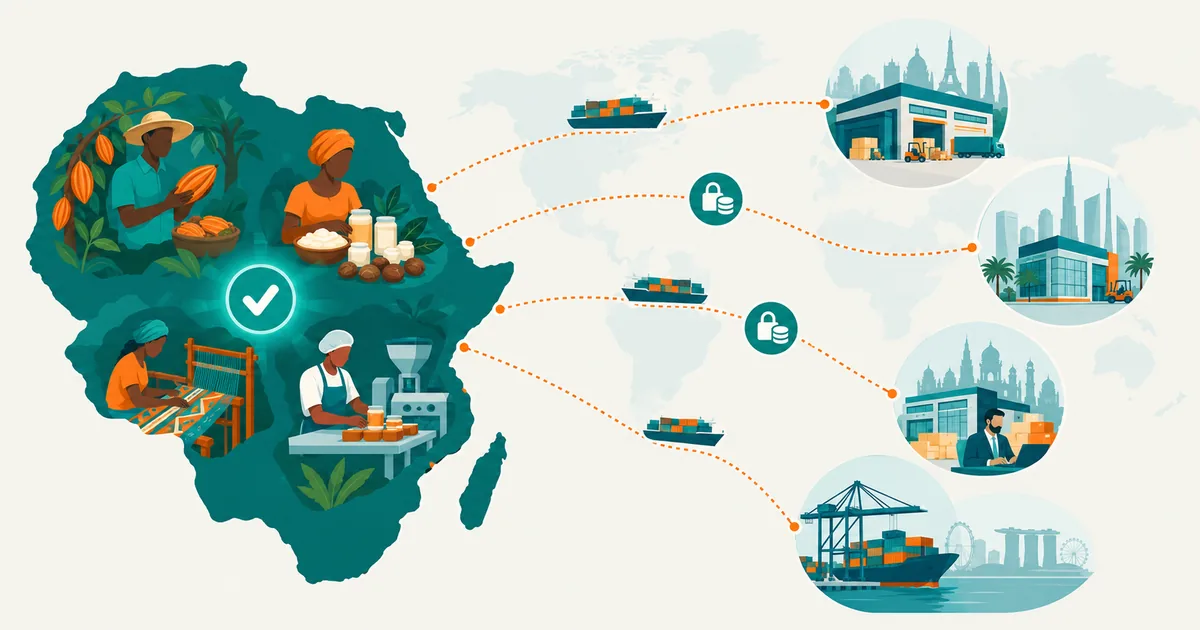
African producers connected to global buyers through a verified export marketplace

Overview

African producers make goods that buyers abroad want, but trust, paperwork and payments keep most of them out of export markets. As fractional CTO for a Nigerian trade-tech startup, I am architecting a verified B2B export marketplace that connects African producers with diaspora buyers and global importers. The MVP has launched, with Nigeria as the first market.

Technologies Used

Node.js
Marketplace, verification and payment services
Next.js
Producer, buyer and admin web app
MongoDB
Supplier profiles, catalogues and certification documents
PostgreSQL
Orders, escrow and payments
AWS S3 + CDN
Product photos and trade documents
Multi-region deployment
Fast for buyers abroad; data in-region where required
Flutterwave + Paystack
African payments and payouts
Stripe
International buyer payments

The Challenge

African producers make goods that buyers abroad want, but trust, paperwork and payments keep most of them out of export markets.

  • Buyers can't verify suppliers. An importer in Europe, the Gulf or among the diaspora has no easy way to check that a producer is real, licensed and able to deliver.
  • Origin is hard to prove. Under the African Continental Free Trade Area (AfCFTA), goods only qualify for lower or zero tariffs if they meet rules of origin, which means proving where and how much value was added.
  • Payments carry risk on both sides. Buyers fear paying for goods that never arrive; producers fear shipping goods that are never paid for.
  • Too many currencies. Trade across dozens of countries means naira, cedis, shillings and rand on one side, and dollars, euros or pounds on the other.
  • Raw goods earn less. Producers who export unprocessed goods miss the premium that value-added products command.

The startup wanted one platform where verified African producers meet serious global buyers, with origin certified and payments protected.
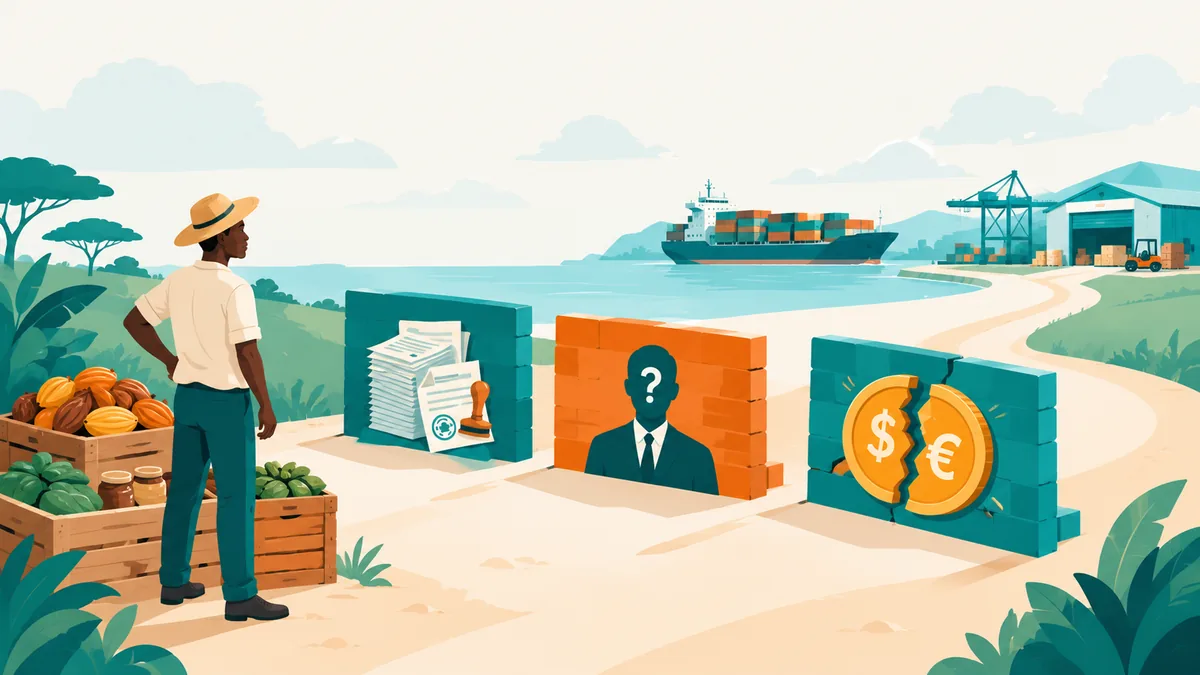
An African producer facing trust, paperwork and payment barriers to exporting

My Role

As fractional CTO, I lead the technology strategy and architecture alongside the founder, with an engineering team of 20+.

  • Architecture: the marketplace, supplier verification, certification workflows, escrow and payments, and supply-chain tracking.
  • Trust design: what a supplier must prove to be verified, and how a product's value-addition chain is checked.
  • Payments: multi-currency gateway integration with Flutterwave, Paystack and Stripe, and escrow-secured transactions across borders.
  • Roadmap: turning the founder's vision into phased releases, starting with the features buyers need to trust the first trades.

Architecture

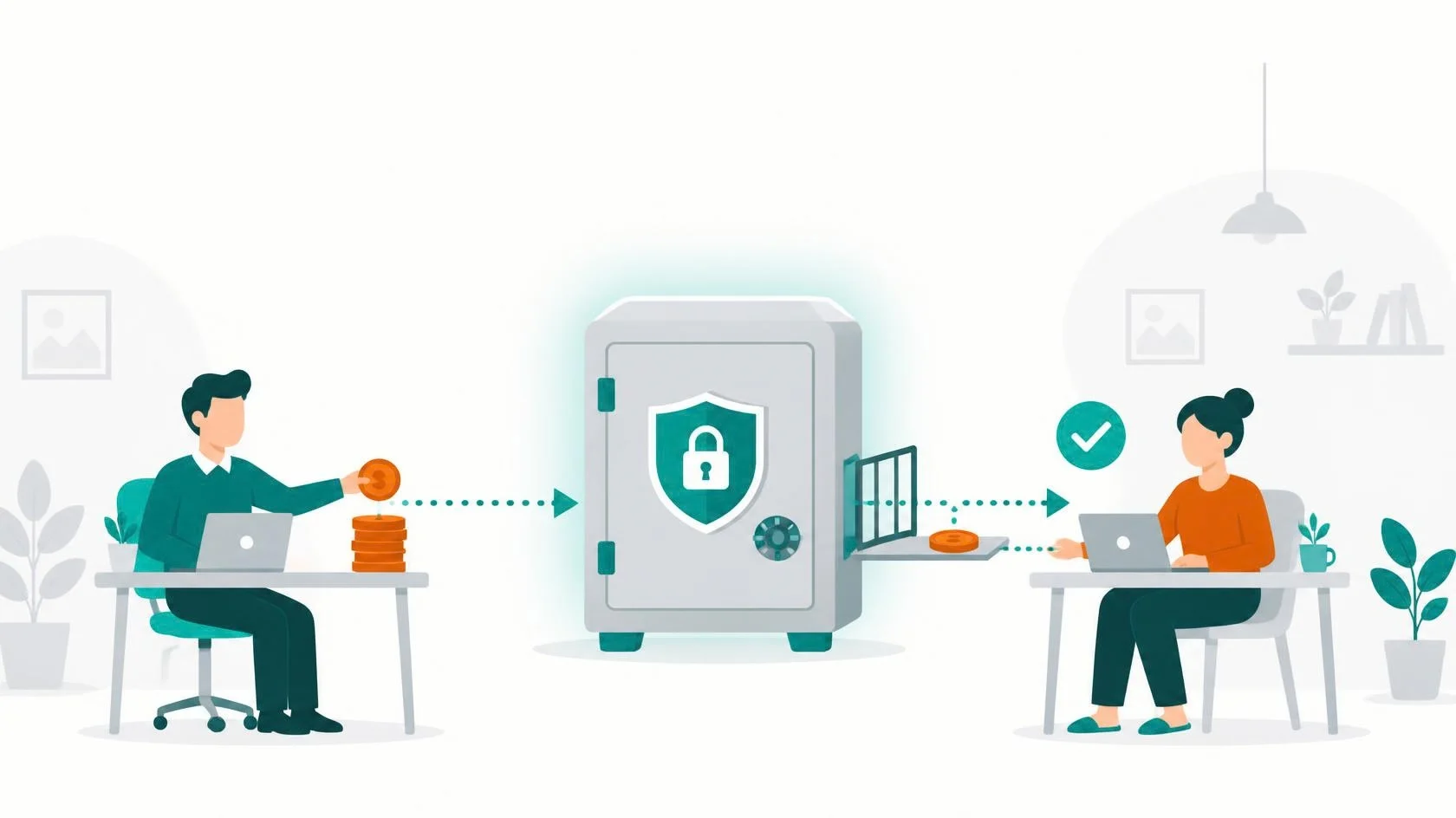
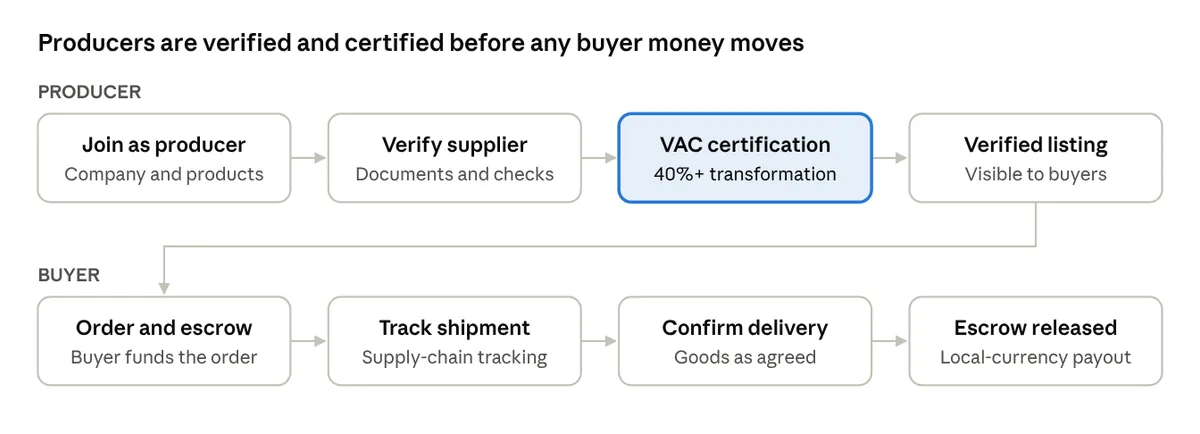
The platform is built around one rule: a producer is verified and certified before any buyer's money moves.

Export marketplace flow: supplier verification, value-addition certification, escrow and payouts
  1. Supplier verification

    Producers register their company and products, then pass verification checks on documents and licences before they can list. Live in the MVP.

    Illustrative mockup of a supplier verification dashboard with documents and checks
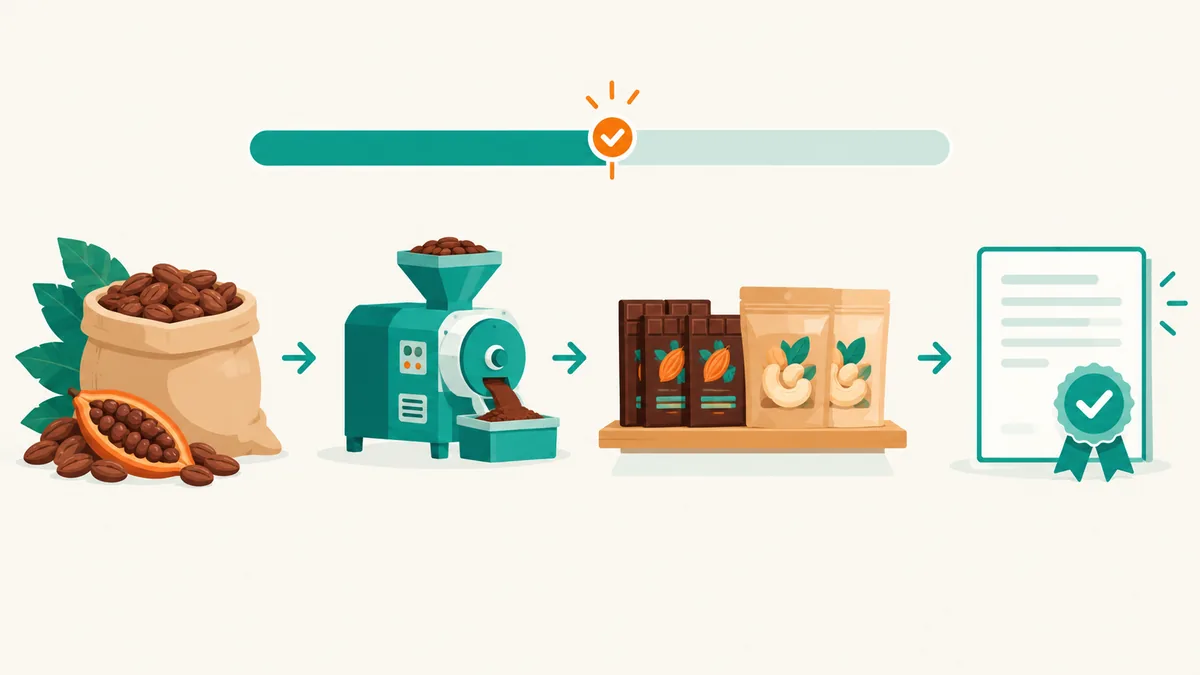
  2. Value Addition Certification (VAC)

    A product chain verification workflow records how raw materials are transformed. Products that meet the 40%+ transformation threshold are certified, supporting AfCFTA rules-of-origin claims and premium pricing. Live in the MVP.

    A product moving from raw material to processed goods with a value-addition certificate
  3. Verified listings

    Buyers, from diaspora shoppers to global importers, browse only verified producers and certified products.

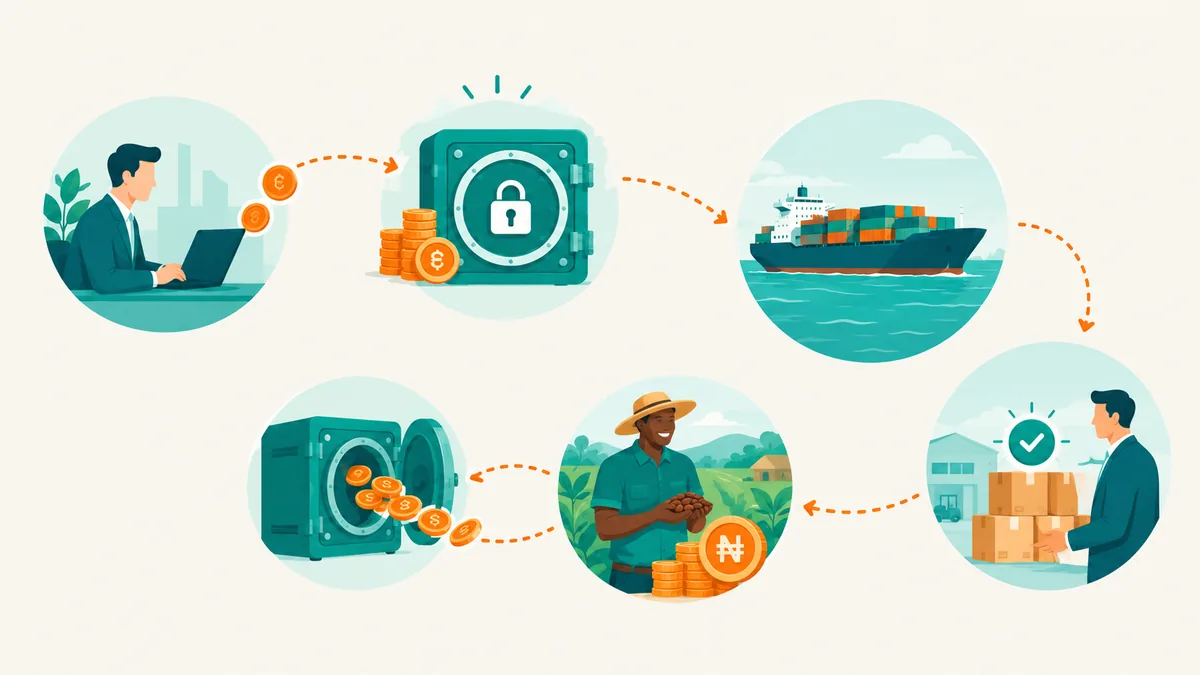
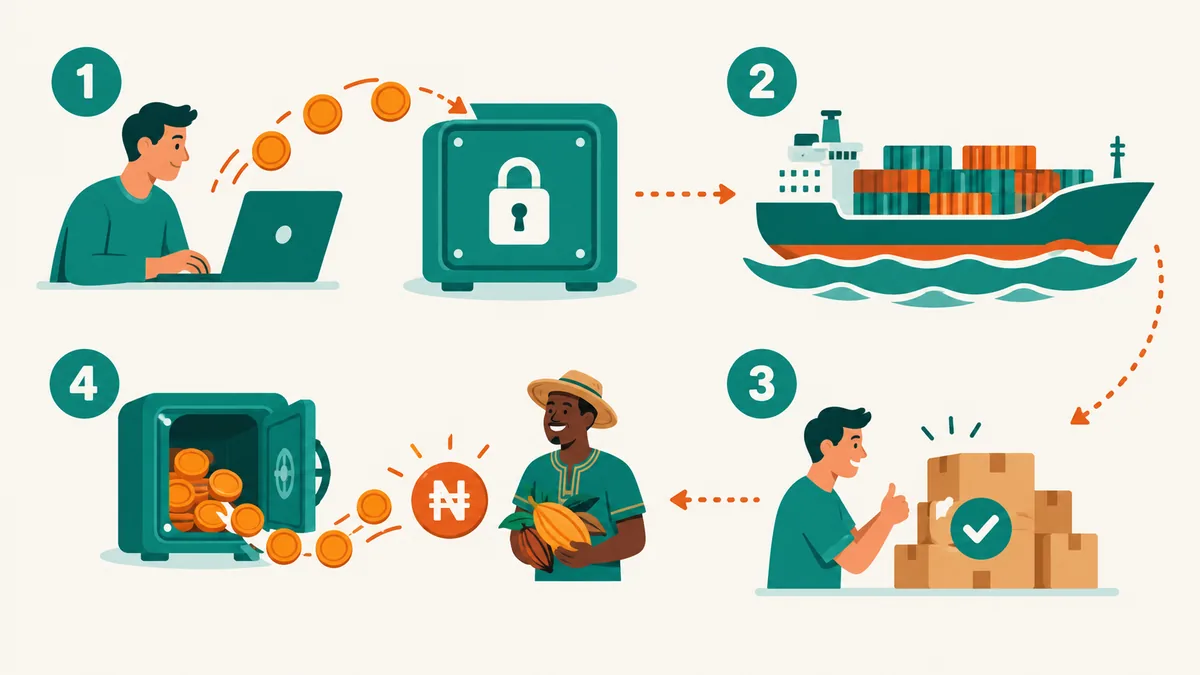
  4. Escrow-secured orders

    The buyer funds the order through Flutterwave, Paystack or Stripe, depending on where they pay from. Funds are held in escrow while the goods are produced and shipped (escrow is in development).

    A buyer funding escrow, goods shipped, and payment released to an African producer
  5. Supply-chain tracking

    Each shipment's progress and documents are tracked on the platform (in development).

  6. Release and payout

    When the buyer confirms delivery as agreed, escrow is released and the producer is paid in their local currency.

Under the hood, the platform runs on Node.js services and a Next.js web app. MongoDB holds flexible records such as supplier profiles, product catalogues and certification documents, while PostgreSQL holds the transactional side: orders, escrow and payments. Product photos and trade documents are stored on AWS S3 and served through a CDN. A multi-region deployment keeps the platform fast for buyers in Europe, the Middle East and Asia as well as sellers in Africa, and lets data stay in-region where rules require it.

Built for African Trade and Global Buyers

The platform sits between African sellers and buyers on several continents, so each side's rules shape the design.

MarketWhat buyers or sellers needHow the design handles it
Africa (sellers and intra-African buyers)AfCFTA rules of origin to qualify for lower or zero tariffs; local currencies; mobile money.Value Addition Certification workflow; multi-currency gateways; Flutterwave and Paystack for African payments and payouts.
Europe and UK (importers and diaspora)Proof of origin and traceability; due-diligence rules for commodities such as cocoa and coffee; GDPR for buyer data.Product chain verification and supply-chain tracking; document storage per shipment.
Middle EastVerified suppliers; certifications such as halal for food products; payment in USD or AED.Supplier verification tiers; certificate uploads checked during verification.
IndiaBulk sourcing of raw and semi-processed goods; USD or INR settlement.Escrow per order or milestone; multi-currency settlement.
South East AsiaSourcing of commodities and processed goods; trade finance expectations.Escrow-secured orders and clear shipment milestones.
Map of trade corridors from Africa to Europe, the Middle East, India and South East Asia

Trade-offs We Made

DecisionWhat we gainWhat we give up
Verification before a supplier can listBuyers only see real, checked producers.Slower supplier growth at launch.
A structured VAC workflow, not self-declared originCertification buyers and customs can rely on.More documents and review work for producers.
Escrow on every orderNeither side carries the payment risk.Funds are held longer; escrow adds operating cost.
Multiple gateways and currencies from the startSellers and buyers pay in what they use.More integrations, reconciliation and FX handling.
Launch in Nigeria firstFaster learning, one set of local rules and partners, and focused verification.54-country coverage comes in phases, not on day one.

What we deliberately are not doing: launching as an open listing site and adding verification later. Once buyers meet one fake supplier, a marketplace rarely wins their trust back.

Results & Impact

The MVP is live, with Nigeria as the first market; wider African coverage is rolling out in phases. Targets are shown as targets, not results.

MVP
Live
Launched with Nigeria as the first market
Target coverage
54+
African countries, rolled out in phases (target)
Value addition threshold
40%+
Transformation required for VAC certification
Engineering team
20+
Building the platform

Business Impact

MVP launched in Nigeria
Supplier verification live: only checked producers can list
Value Addition Certification live, supporting AfCFTA rules-of-origin claims
Flutterwave, Paystack and Stripe integrated for buyers and sellers across markets
Escrow and supply-chain tracking in development
Multi-region deployment with CDN for buyers abroad

Where This Pattern Applies

The same verify, certify and escrow design fits any cross-border B2B marketplace where buyers can't meet sellers in person:

  • Agricultural and processed-food exports, from cocoa and cashew to shea and coffee.
  • Textiles, leather and crafts sold to importers and retailers abroad.
  • Diaspora commerce, where buyers in Europe, the Gulf or North America order from home markets.
  • Regional trade blocs beyond Africa, such as ASEAN or the Gulf, wherever origin rules decide the tariff.

Key Takeaways

Verify sellers before they can list; trust is the product.
Make origin and value addition provable with structured workflows and documents.
Put escrow on every trade, so neither side carries the risk alone.
Plan multiple currencies and payment rails from day one.
Launch in one market first, then expand country by country.

Building a Cross-Border or B2B Marketplace?

With 26+ years of building platforms, I help founders design cross-border and B2B marketplaces with verification, escrow and payments that buyers in every market can trust.